
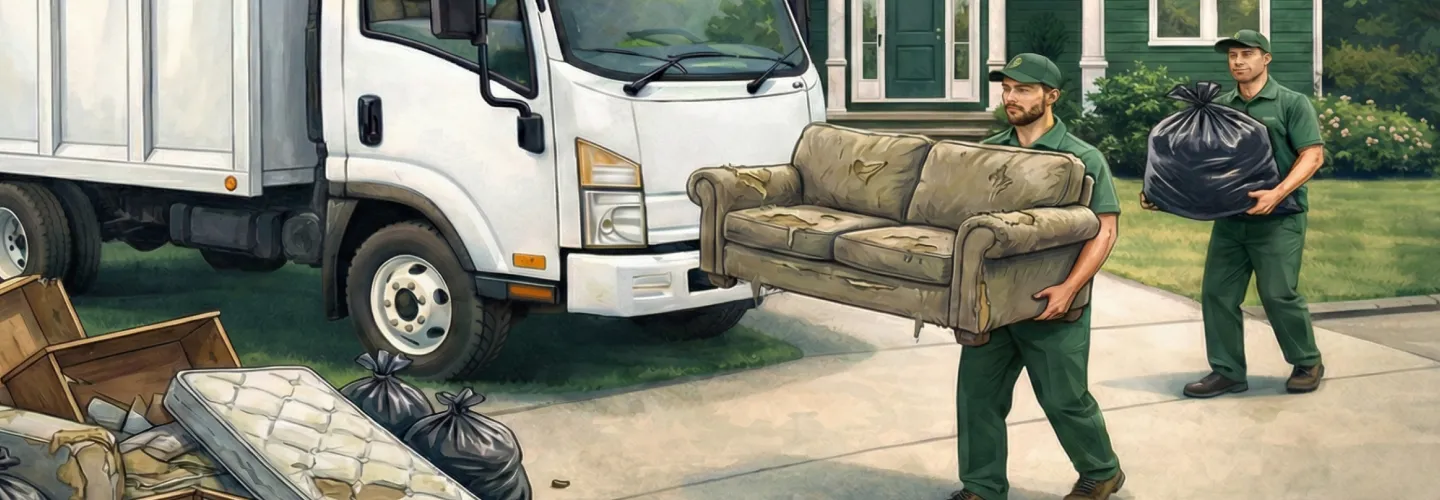
Covington Hoarding Cleanup Services
Choose our hoarding cleanup team for respectful, judgment-free service that restores safety, comfort, and peace of mind to your home—handled by experienced professionals who truly care.
Get a Free QuoteOur Covington Junk Removal Services
Hoarding Cleanup in Covington, GA – Local Service Guide
Hoarding cleanup in Covington, GA requires a sensitive, thorough approach tailored to local needs. Whether you’re in Clark’s Grove, Lochridge Estates, or near the Covington Square, residents often seek help after major life events, seasonal cleanouts, or property transitions. For residential items like furniture, mattresses, or appliances, triggers include spring replacements, storm damage, or estate transitions. Local donation centers and recycling programs offer alternatives to landfill disposal, but large items—like hot tubs or sheds—may require special access or weather considerations, especially during rainy seasons. For residential spaces such as garages, basements, or yards, flooding in low-lying areas and heavy tree coverage can drive more frequent cleanouts, particularly after storms or during fall leaf cycles. Commercial properties in Covington’s downtown, medical corridors, or retail centers often need discreet, after-hours service to minimize disruption, with higher volumes and strict operational timelines. Specialty cleanups—like foreclosures, estates, or construction debris—demand careful planning, coordination with property managers, and compliance with local disposal rules. For more on local regulations and resources, visit the Covington Public Works Department.
Key Considerations for Hoarding Cleanup in Covington
- Timing: Plan around seasonal weather and local event schedules
- Permits: Check for required city permits for large-scale disposals
- Disposal Channels: Use local donation, recycling, and landfill options
- Access: Consider driveway size, street parking, and property layout
- Volume: Estimate debris to select proper equipment and crew size
- Coordination: Work with local authorities and property managers for specialty cases
Benefits of Hoarding Cleanup in Covington
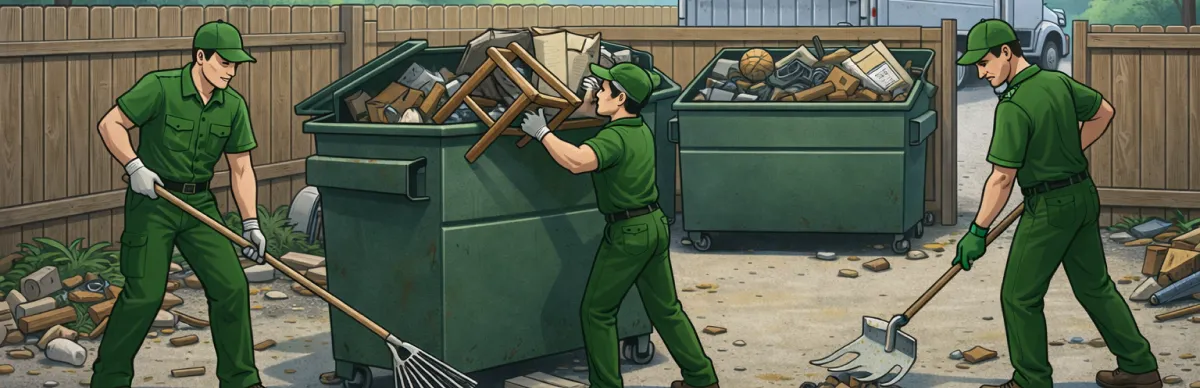
Compassionate and Discreet Service
Certified Cleanup Professionals
Fast and Reliable Response
Thorough Sanitization and Odor Removal
Customized Cleanup Plans
Safe Disposal of Hazardous Materials
Coordinating Hoarding Cleanup with Covington's Code Enforcement and Public Works Departments
Hoarding cleanup in Covington, GA, frequently involves coordination between multiple municipal departments to ensure compliance with local property maintenance codes and sanitation standards. The Covington Public Works Department oversees sanitation services and can advise residents on bulk waste collection procedures for large-volume removal projects. Code enforcement actions related to hoarding conditions may be initiated through the Covington Planning & Development office, which administers building inspections and property compliance reviews.
Key coordination steps include:
- Contacting Public Works before cleanup begins to arrange bulk waste pickup or confirm transfer station access for oversized loads
- Scheduling a code enforcement pre-inspection to document existing violations and establish a remediation timeline
- Obtaining building permits if structural repairs or renovation work is required after debris removal
- Confirming hauler licensing requirements for any commercial waste removal contractors operating within city limits
Covington Public Works Department
2194 Emory Street NW, Covington, GA 30014
Phone: (770) 385-2000
Official Website: Covington Public Works Department
Biohazard and Hazardous Material Disposal Requirements for Covington Hoarding Cases
Hoarding environments in Covington frequently contain hazardous materials that require specialized handling under both Georgia and federal regulations. Common biohazards encountered during hoarding cleanup include animal waste accumulation, spoiled food, mold contamination, and sharps or medical waste. The Georgia Environmental Protection Division (GA EPD) regulates solid waste management statewide under the Georgia Comprehensive Solid Waste Management Act (O.C.G.A. § 12-8-20), which establishes disposal standards for hazardous and special waste streams.
Materials requiring special handling include:
- Household hazardous waste such as paint, solvents, pesticides, and cleaning chemicals — prohibited from regular municipal waste collection
- Biohazardous materials including animal remains, bodily fluids, and contaminated textiles — must be handled by licensed biohazard remediation professionals
- Sharps and medical waste — require puncture-resistant containers and disposal through approved medical waste facilities
- Asbestos-containing materials in pre-1980 homes — require licensed abatement per EPA regulations
- Lead paint debris in pre-1978 structures — must follow the EPA Renovation, Repair, and Painting Rule
The Covington Environmental Compliance department provides guidance on stormwater protection and pollution prevention during large-scale cleanups.
Covington Environmental Compliance Department
2194 Emory Street NW, Covington, GA 30014
Phone: (770) 385-2000
Official Website: Covington Environmental Compliance
Georgia's Solid Waste Regulations and Landfill Restrictions Affecting Hoarding Cleanup
Georgia's solid waste management framework directly impacts how materials removed during hoarding cleanup must be sorted, transported, and disposed of. The Georgia Environmental Protection Division enforces the Georgia Comprehensive Solid Waste Management Act, which requires all solid waste haulers to transport materials only to permitted disposal facilities. Newton County, where Covington is located, operates under a regional solid waste management plan that governs landfill access and recycling diversion goals.
Important state-level requirements for hoarding cleanup disposal include:
- Hauler permits — commercial waste transporters must hold valid Georgia solid waste handling permits issued by GA EPD
- Tire disposal — tires recovered from hoarding sites cannot be landfilled and must be delivered to licensed tire processors
- Appliance refrigerant recovery — units containing refrigerants require certified technician recovery per EPA Section 608 before disposal
- Electronics — while Georgia does not currently enforce a statewide e-waste landfill ban, responsible recycling through certified facilities is strongly encouraged
- Yard waste separation — organic debris must be separated from general household waste for composting or mulching at approved facilities
Georgia Environmental Protection Division
2 Martin Luther King Jr. Drive SE, Suite 1456, Atlanta, GA 30334
Phone: (404) 656-4713
Official Website: Georgia Environmental Protection Division
Recycling, Donation, and Material Recovery Options During Covington Hoarding Cleanup
Hoarding cleanup projects in Covington often yield significant volumes of salvageable items that can be diverted from landfills through recycling and donation programs. Prioritizing material recovery reduces disposal costs, supports community organizations, and aligns with Newton County's solid waste diversion objectives. Before beginning any hoarding cleanup, a thorough sorting plan should be established to separate reusable goods, recyclable materials, and waste requiring disposal.
Recommended material recovery strategies include:
- Furniture and household goods in usable condition may be donated to local charitable organizations such as Habitat for Humanity ReStore or Goodwill; schedule pickups in advance for large volumes
- Scrap metal including appliance frames, shelving, and fixtures can be delivered to licensed scrap metal recyclers in the Newton County area
- Cardboard, paper, and plastics should be separated and delivered to recycling drop-off locations accepted by Covington's waste management services
- Clothing and textiles in wearable condition can be donated; heavily soiled or contaminated textiles must be disposed of as solid waste
- Electronics including televisions, computers, and peripherals should be recycled through certified e-waste processors rather than placed in general waste streams
Post-Cleanup Property Inspection and Code Certification in Covington
After hoarding cleanup is completed in Covington, property owners may need to coordinate with the Covington Planning & Development department to verify that the property meets local building and safety codes. Properties subject to code enforcement action prior to cleanup typically require a follow-up inspection to confirm that all violations have been remediated. This process is essential for restoring the property to habitable condition and avoiding ongoing municipal penalties.
Post-cleanup compliance steps include:
- Requesting a re-inspection through Planning & Development to verify code violation resolution
- Documenting all remediation work with photographs and contractor receipts for municipal records
- Addressing structural damage revealed during cleanup — water damage, pest infestation, or compromised flooring may require building permits for repair
- Fire safety verification through the Covington Fire Department, particularly if blocked egress routes, non-functional smoke detectors, or fire hazards were identified
- Pest control certification if rodent or insect infestations were present, confirming treatment completion before re-occupancy
Covington Planning & Development Department
2194 Emory Street NW, Covington, GA 30014
Phone: (770) 385-2000
Official Website: Covington Planning & Development
What Neighborhoods Do We Serve Throughout Covington, GA?
- Covington Historic District: This nationally recognized historic district features homes dating to the mid-1800s with narrow interior hallways and limited attic access. Hoarding cleanup in these structures requires careful attention to lead paint and asbestos protocols, and any exterior work may require Historic Preservation Commission review.
- Clark's Grove: A planned residential community with HOA oversight and single-family homes. Hoarding cleanup logistics benefit from wide streets and driveway access, though HOA notification may be required for extended cleanup operations involving multiple service vehicles.
- Eastside/Highway 278 Corridor: A mix of older residential properties and commercial buildings along a busy thoroughfare. Traffic management and safe loading zone coordination are important considerations for cleanup crews working near high-volume roadways.
- Oxford Road Area: Residential neighborhoods near Oxford College feature a mix of single-family homes and rental properties. Student housing turnover can contribute to accumulation issues, and older building stock may present structural concerns during heavy debris removal.
- Covington Town Center: Properties near the downtown square include mixed-use buildings with upper-floor residential units. Stairwell-only access, limited parking for service vehicles, and pedestrian traffic require advance scheduling and coordination with municipal authorities.
- West Covington: Established residential neighborhoods with mature tree canopy and older infrastructure. Overhead clearance for service vehicles and aging septic or plumbing systems exposed during cleanup may require additional professional assessment.