

Covington Construction Debris Removal Services
Choose our construction debris removal for fast, reliable service that keeps your site safe, compliant, and ready for the next phase—saving you time and hassle.
Get a Free QuoteOur Covington Junk Removal Services
Construction Debris Removal in Covington, GA – Local Service Guide
Construction debris removal in Covington, GA is essential for keeping homes and businesses safe, clean, and compliant with local regulations. Whether you’re renovating a historic home in Clark’s Grove, replacing appliances in Lochridge, or managing a commercial build-out near the Covington Square, timely debris removal ensures projects stay on track and neighborhoods remain attractive. For residential items like old furniture, mattresses, or appliances, removal often follows seasonal upgrades, storm damage, or major life events. Local options include donation, recycling, or city-approved disposal, with logistics shaped by property access and weather. Garage, basement, and yard cleanouts are common after spring storms or during annual property maintenance, especially in flood-prone or tree-heavy areas. Commercial clients—such as restaurants on Highway 278 or medical offices near Newton Plaza—require discreet, scheduled pickups to minimize disruption and handle larger volumes. Specialty services, including dumpster rentals or estate cleanouts, demand careful planning and coordination, particularly for foreclosures or hoarding situations. For guidance on local disposal rules and permits, visit the Covington Public Works Department.
Key Considerations for Construction Debris Removal in Covington
- Timing projects around local weather and neighborhood access
- Securing necessary permits for large-scale or specialty removals
- Choosing proper disposal channels: donate, recycle, or landfill
- Navigating tight driveways or limited street parking in historic districts
- Estimating debris volume for efficient scheduling and cost control
- Coordinating with city services for regulated or hazardous materials
Benefits of Construction Debris Removal in Covington
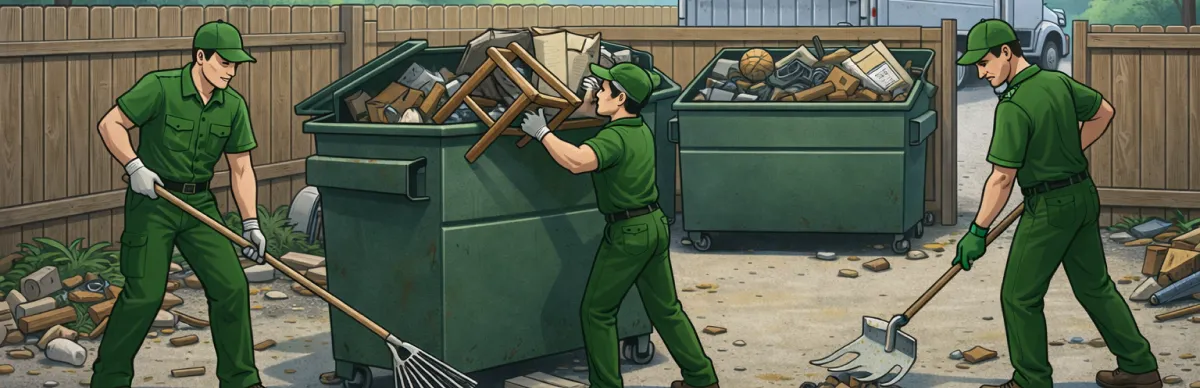
Fast and Reliable Cleanup
Safe Job Site Practices
Eco-Friendly Disposal Solutions
Cost-Effective Debris Removal
Experienced Local Professionals
Flexible Scheduling Options
Coordinating Construction Debris Removal with Covington's Public Works Department
Construction and demolition (C&D) debris generated from renovation, remodeling, or demolition projects in Covington must be managed in accordance with municipal solid waste regulations. The Covington Public Works Department oversees sanitation services and can direct residents and contractors toward approved disposal methods for construction materials. Key considerations for debris removal coordination include:
- Material types commonly generated: lumber, drywall, roofing shingles, concrete, brick, metal framing, plumbing fixtures, and flooring materials
- Scheduling requirements: haulers must coordinate pickup times to comply with local noise ordinances and avoid disruption to neighboring properties
- Load separation: mixed C&D loads may be rejected at disposal facilities; sorting debris on-site is strongly recommended
- Contractor responsibility: the party generating debris is responsible for ensuring lawful transport and disposal at a permitted facility
Residents undertaking home improvement projects should contact Public Works before beginning work to confirm current collection policies and any applicable restrictions on curbside placement of construction materials.
Covington Public Works Department
2194 Emory Street NW, Covington, GA 30014
Phone: (770) 385-2000
Official Website: Covington Public Works Department
Covington Building Permit Requirements for Renovation and Demolition Debris Projects
Before generating construction debris through renovation or demolition activities in Covington, property owners and contractors must obtain appropriate building permits through the Covington Planning & Development Department. Permit requirements ensure that debris removal is planned, safe, and compliant with local zoning and building codes. Important permit and compliance considerations include:
- Demolition permits: required for partial or full structural demolition; applications must include a waste management plan detailing how debris will be sorted, transported, and disposed
- Renovation permits: interior and exterior remodeling projects that generate significant debris volumes typically require building permits and inspections
- Historic district review: properties within Covington's designated historic areas may require additional approvals from the Planning Commission before demolition or exterior renovation work begins
- Erosion and sediment control: projects disturbing land must comply with stormwater management requirements to prevent debris and sediment from entering waterways
Failure to obtain required permits before generating construction debris may result in code enforcement action, stop-work orders, and fines.
Covington Planning & Development Department
2116 Stallings Street NW, Covington, GA 30014
Phone: (770) 385-2100
Official Website: Covington Planning & Development
Georgia's Solid Waste Management Act and Construction Debris Disposal Compliance
Construction debris disposal in Covington is governed at the state level by the Georgia Comprehensive Solid Waste Management Act (O.C.G.A. § 12-8-20), administered by the Georgia Environmental Protection Division (GA EPD). This legislation establishes the regulatory framework for how C&D waste must be handled, transported, and disposed throughout the state. Key state-level requirements affecting Covington projects include:
- Permitted disposal facilities: all construction debris must be taken to facilities holding a valid solid waste handling permit issued by GA EPD; illegal dumping carries penalties of up to $25,000 per day per violation
- Inert waste landfills: clean concrete, brick, block, and asphalt may qualify for disposal at inert waste landfills, which have less restrictive permitting than municipal solid waste landfills
- Waste transportation: vehicles hauling C&D debris on public roads must secure loads to prevent spillage; uncovered loads may result in traffic citations and littering fines
- Asbestos-containing materials: structures built before 1980 may contain asbestos; Georgia requires a thorough inspection by a licensed inspector before demolition, and all friable asbestos must be removed by a certified abatement contractor prior to debris generation
Contractors and homeowners should verify that any hauler transporting construction debris from a Covington project site is delivering materials to a GA EPD-permitted facility.
Georgia Environmental Protection Division
2 Martin Luther King Jr. Drive SE, Suite 1456 East, Atlanta, GA 30334
Phone: (404) 656-4713
Official Website: Georgia Environmental Protection Division
Stormwater Protection and Environmental Compliance for Covington Construction Sites
Construction debris removal in Covington must be conducted in a manner that protects local waterways and complies with the city's stormwater management regulations. The Covington Environmental Compliance Department enforces erosion and sediment control measures on construction sites to prevent pollutants from entering the municipal stormwater system. Environmental compliance obligations during debris removal include:
- Erosion and sediment control plans: projects disturbing one or more acres of land require a Land Disturbance Permit and an approved erosion control plan before work begins
- Debris containment: loose construction materials such as sawdust, insulation, packaging, and broken drywall must be contained on-site and prevented from migrating into storm drains or adjacent properties
- Prohibited discharges: washing concrete, paint, or solvents into storm drains is a violation of both local ordinances and the federal Clean Water Act
- Site stabilization: upon project completion, exposed soil must be stabilized within 14 calendar days to prevent sediment runoff
- Inspection requirements: active construction sites are subject to periodic inspections by the Environmental Compliance Department
Violations of stormwater protection requirements may result in stop-work orders, fines, and required remediation at the property owner's expense.
Covington Environmental Compliance Department
2194 Emory Street NW, Covington, GA 30014
Phone: (770) 385-2000
Official Website: Covington Environmental Compliance
Material Sorting and Recycling Requirements for Covington Construction Debris
Proper sorting and separation of construction debris is essential for regulatory compliance and landfill diversion in Covington. While Georgia does not currently mandate statewide C&D recycling, many disposal facilities in the Newton County area require load separation, and recycling construction materials reduces disposal costs and environmental impact. Recommended sorting categories for construction debris include:
- Concrete, brick, and masonry: eligible for crushing and reuse as aggregate fill; accepted at inert waste landfills at lower disposal rates than mixed C&D waste
- Scrap metal: steel framing, copper piping, aluminum flashing, and metal fixtures have resale value and should be separated for recycling at licensed scrap yards
- Clean wood: untreated dimensional lumber and plywood may be accepted at wood recycling facilities for mulch or biomass processing; painted or treated wood requires standard C&D disposal
- Roofing shingles: asphalt shingles are recyclable at specialized facilities that process them into road paving material
- Drywall and gypsum board: some facilities accept clean drywall for recycling; contaminated or painted drywall typically requires landfill disposal
- Hazardous materials: lead paint, asbestos, chemical solvents, and adhesives must be handled separately under EPA hazardous waste regulations and may not be mixed with standard construction debris
On-site sorting bins or designated staging areas help ensure materials are properly separated before transport, reducing the risk of load rejection at disposal facilities.
What Neighborhoods Do We Serve Throughout Covington, GA?
- Covington Historic District: This nationally recognized historic area features homes and commercial structures dating to the mid-1800s. Renovation and demolition projects require Planning Commission review, and buildings constructed before 1980 should be assessed for asbestos and lead paint before debris removal begins.
- Clark's Grove: A master-planned residential community with homeowner association oversight. Construction debris removal must comply with HOA guidelines regarding staging areas, hauling schedules, and street access to minimize disruption to residents.
- Eastside: Established single-family neighborhoods with mature tree canopy and narrower residential streets. Debris hauling vehicles may face overhead clearance limitations from low-hanging branches, and on-street staging of materials should be coordinated with the Public Works Department.
- Cricket Ridge: A newer subdivision with wider streets and modern infrastructure. Construction debris from new-build projects and home additions is common; contractors should ensure loads are secured and site erosion controls are maintained during removal.
- Town Center / Square Area: Covington's downtown commercial core surrounds the historic town square. Debris removal from commercial renovation projects requires attention to pedestrian traffic, limited parking for hauling vehicles, and potential right-of-way coordination.
- West Covington: A mix of residential and light commercial properties with varying lot sizes. Older structures in this area may require hazardous material assessments, and access to some properties may be limited by narrow driveways or unpaved surfaces.